
Labor Human Rights

Labor Human Rights
- Social Inclusion
- LOHAS Enterprise
- Labor Human Rights


Human Rights Management
Inventec is committed to creating an equal and harmonious working environment. It is clearly stipulated in our policy that all factories around the world should treat all individuals equally, regardless of their race, social class, language, belief, religion, political affiliation, gender, marital status, and mental disability. We also invite our supply chain partners to join us to follow the same standards. We comply with and support the core principles of international norms and guidelines, including the Responsible Business Alliance Code of Conduct, the UN Universal Declaration of Human Rights, the UN Global Compact, the UN Guiding Principles on Business and Human Rights, the ILO Declaration on Fundamental Principles and Rights at Work, and the OECD Guidelines for Multinational Enterprises, as well as relevant laws and regulations of the countries where we operate. Based on these, we have formulated the human rights policy, to ensure the protection of human rights.
Milestones in Human Rights Management
.png)
Human Rights Governance
To ensure responsiveness to labor and human rights concerns from diverse stakeholders—including employees, customers, suppliers, government agencies, and local communities—the Inventec Group’s human rights management is overseen by the Sustainability Office. This office facilitates resource allocation, drives cross-departmental integration, and initiates human rights due diligence projects, while collaborating with relevant functional teams and units to track KPI setting and achievement status for response measures addressing high concern material human rights issues. Concurrently, the Sustainability Office refines strategic directions and management guidelines based on operational realities, reporting annual performance and project progress to the Sustainability Committee.
.png)
Human Rights Due Diligence
Inventec conducts systematic, periodic reviews of potential human rights risks, carrying out human rights due diligence on a biennial basis. The topics are aligned with international assessments, the Responsible Business Alliance (RBA) Code of Conduct, global trends, and human rights concerns identified by industry peers and benchmark companies. In 2025, the reporting scope was expanded from employees (including female and migrant workers) and Tier 1 suppliers to include Tier 2 and Tier 3 suppliers, as well as contractors and local community stakeholders, enabling the systematic identification and categorization of salient human rights issues. For these highly prioritized concerns, the Company develops tailored mitigation and remediation measures to proactively lower the likelihood of occurrence and minimize potential impacts. Inventec also plans to expand the scope of its human rights due diligence to include new business relationships, such as mergers, acquisitions, and joint ventures, where human rights due diligence will be conducted as part of the evaluation process.


- All employees
- Women employees
- Migrant Workers
- Tier 1 Suppliers
- Tier 2,3 supplier
- Contractors
- Communities
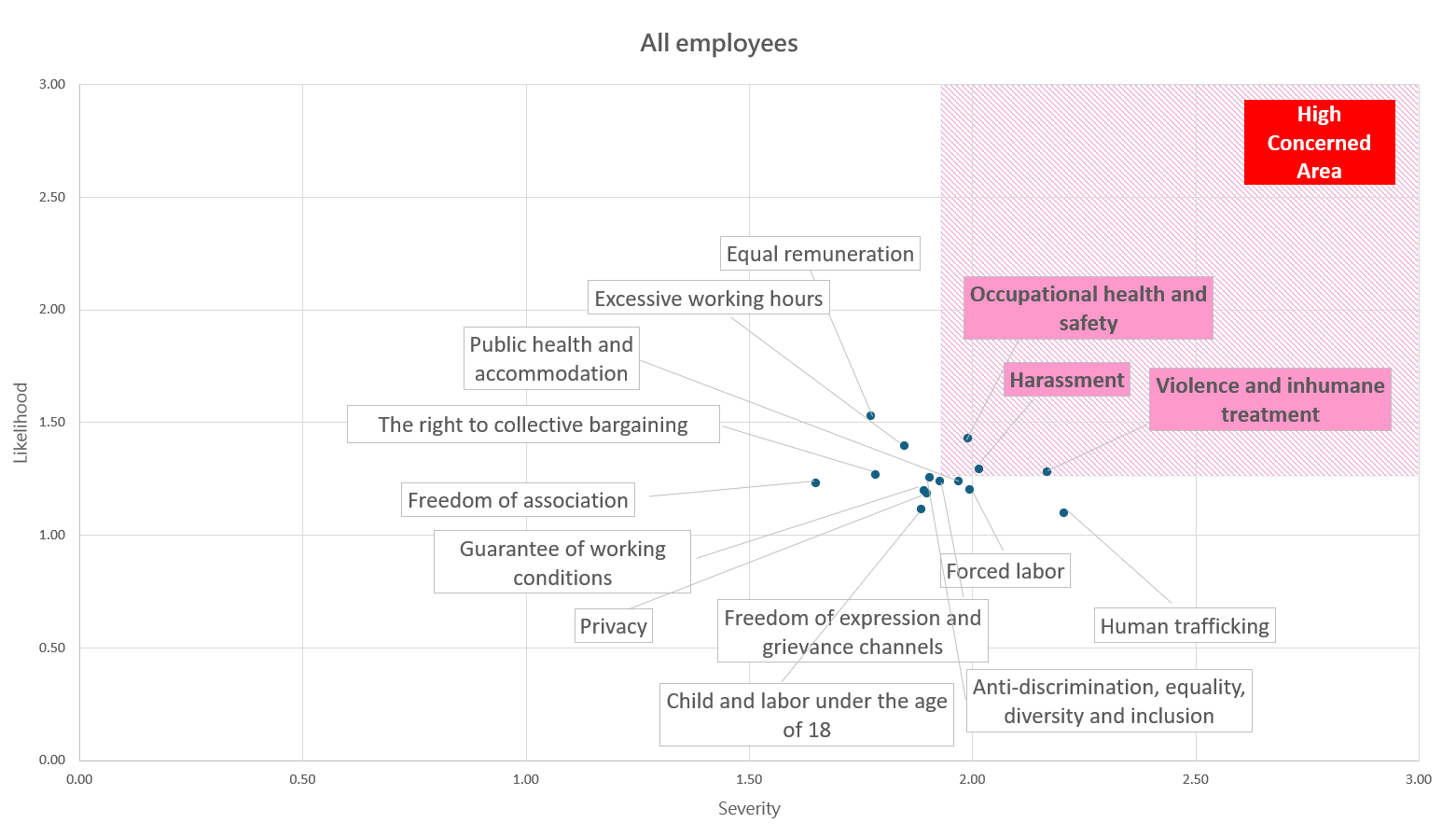
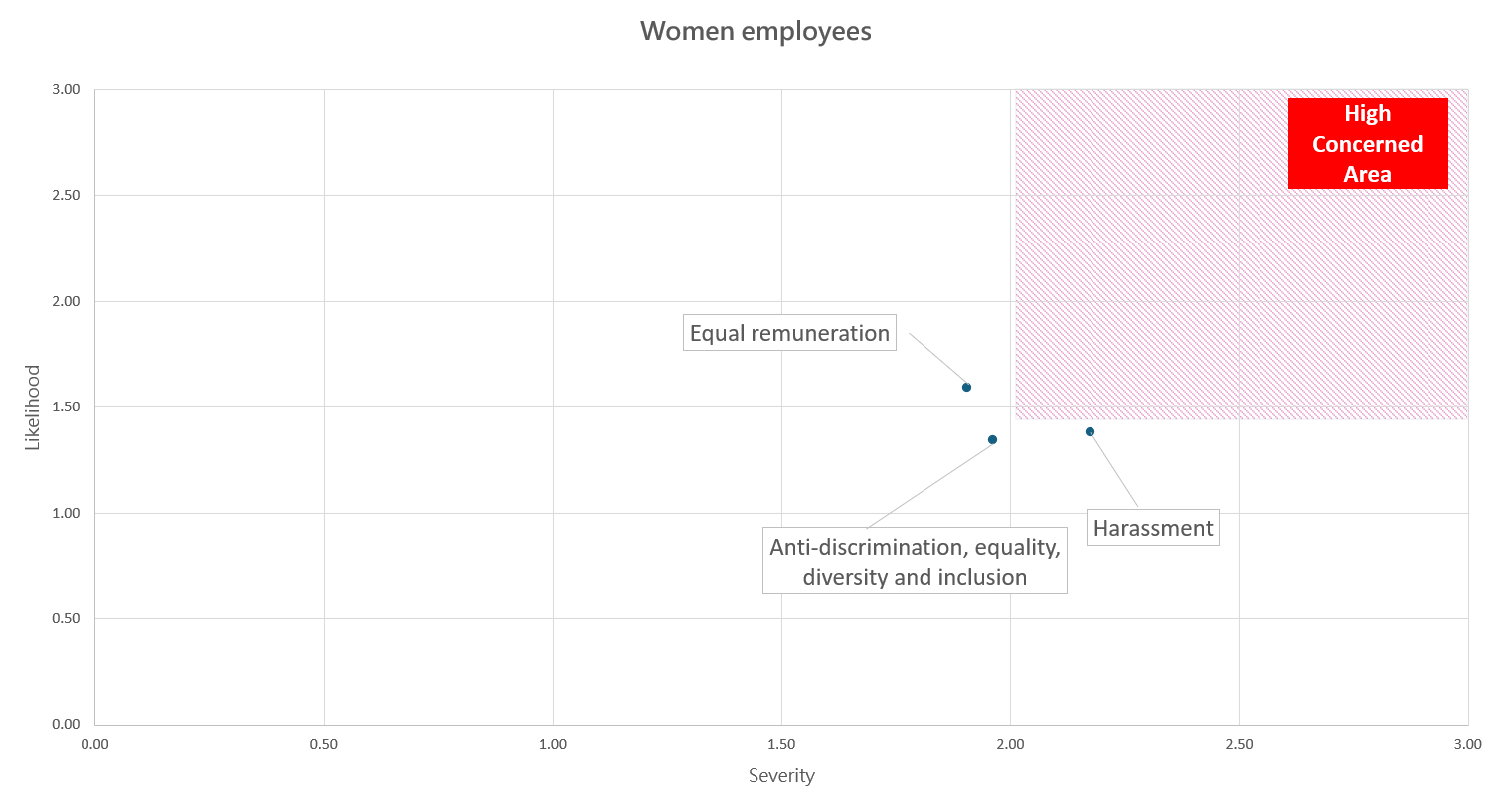
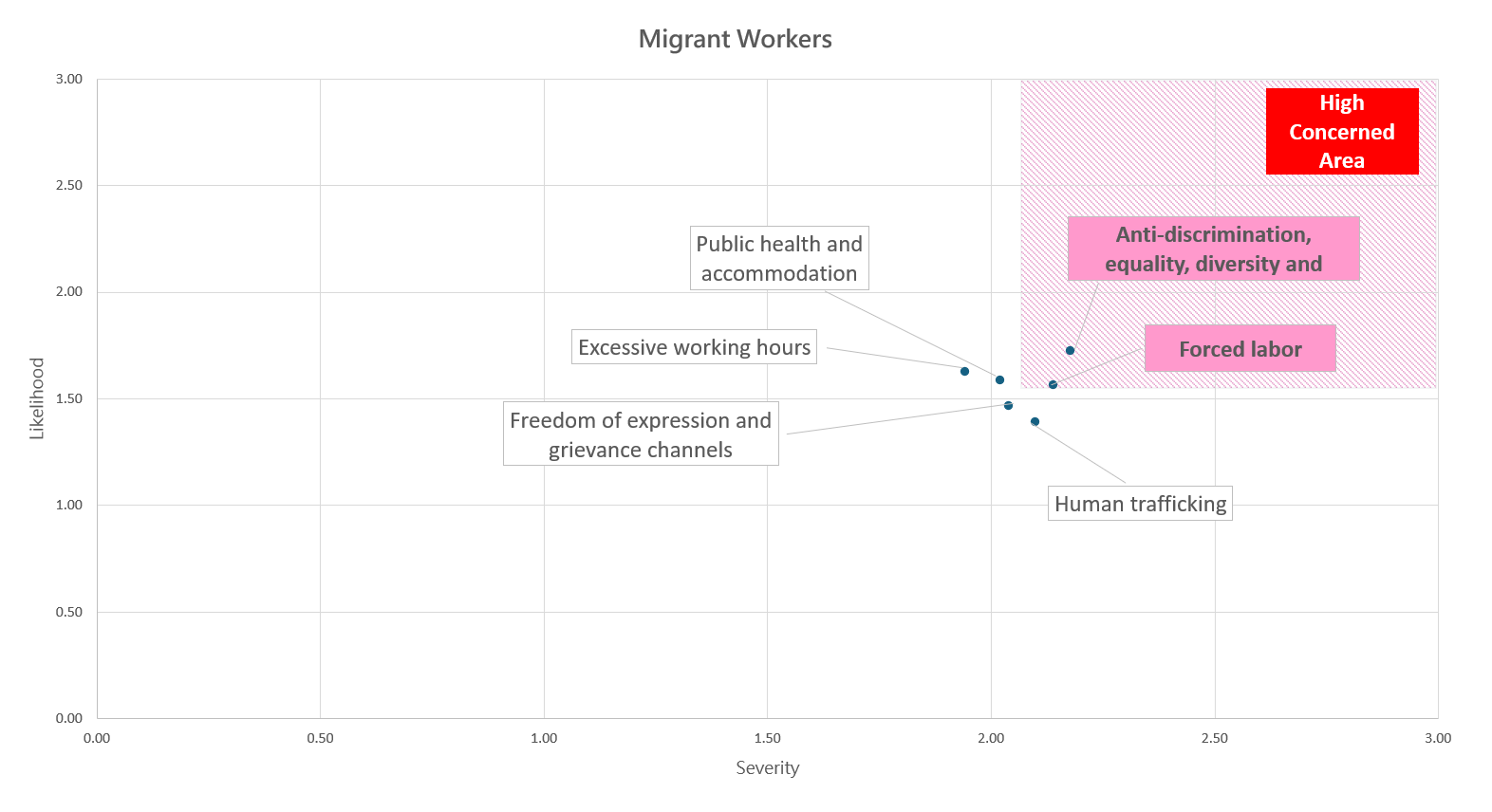
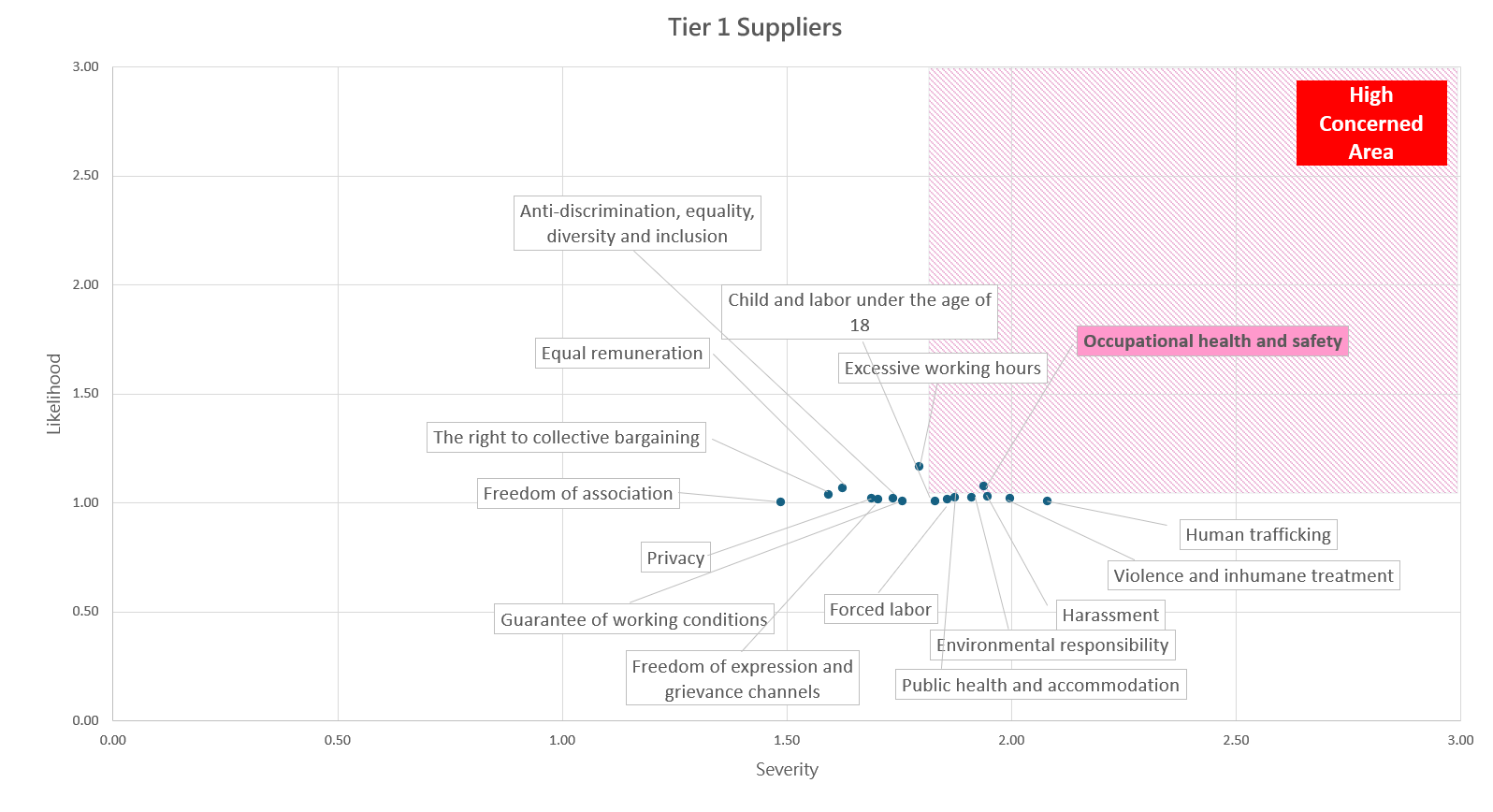
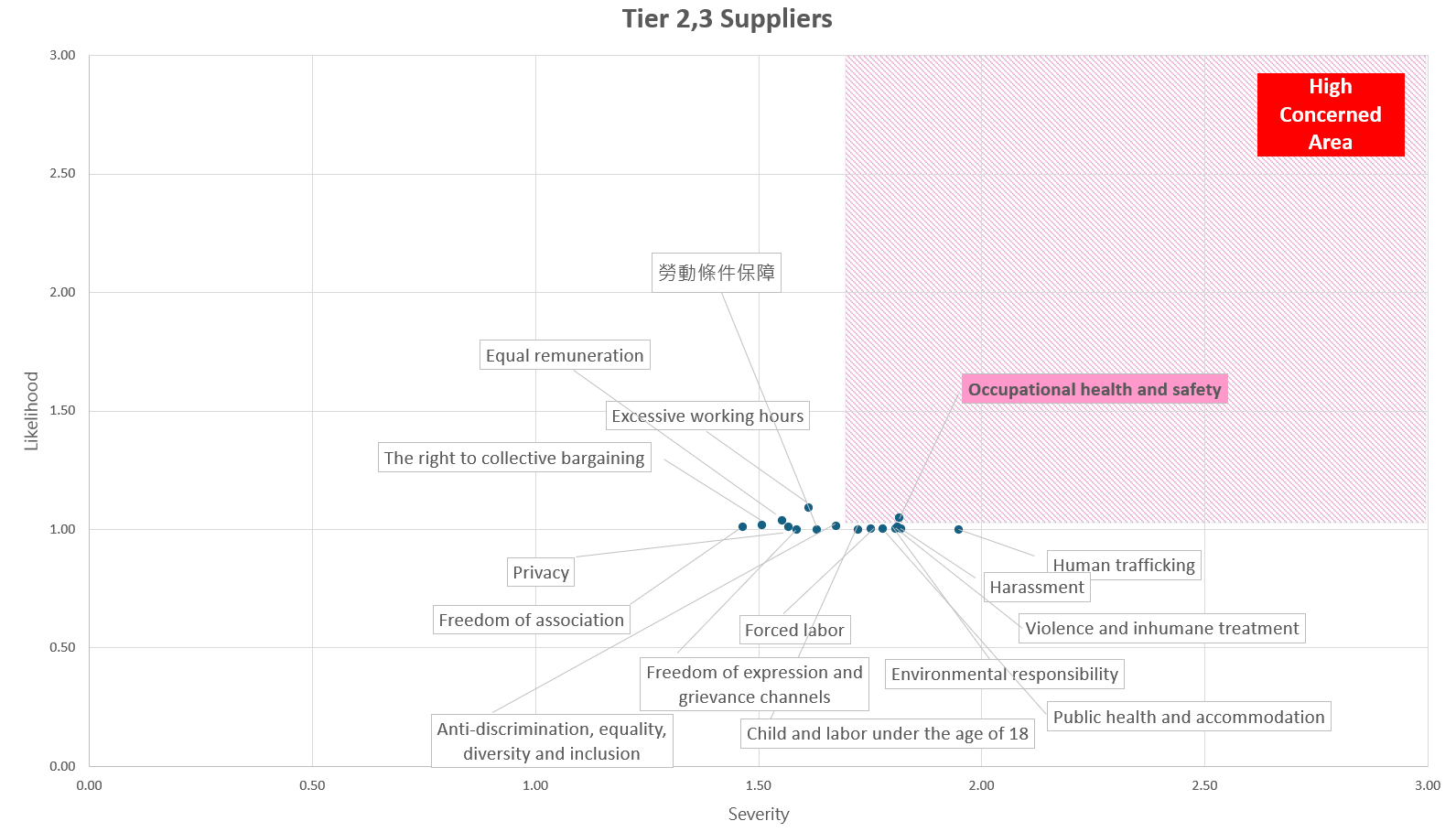
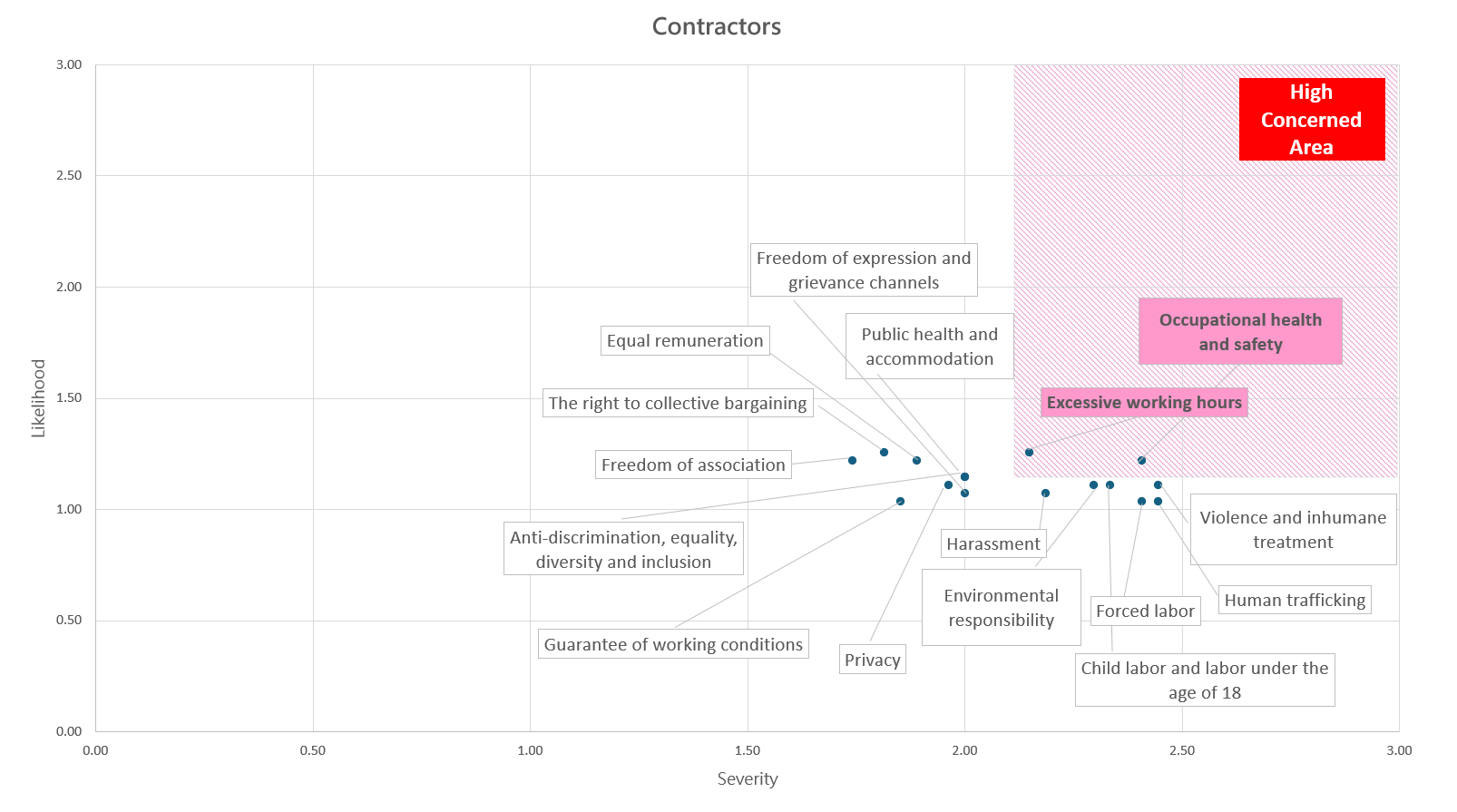
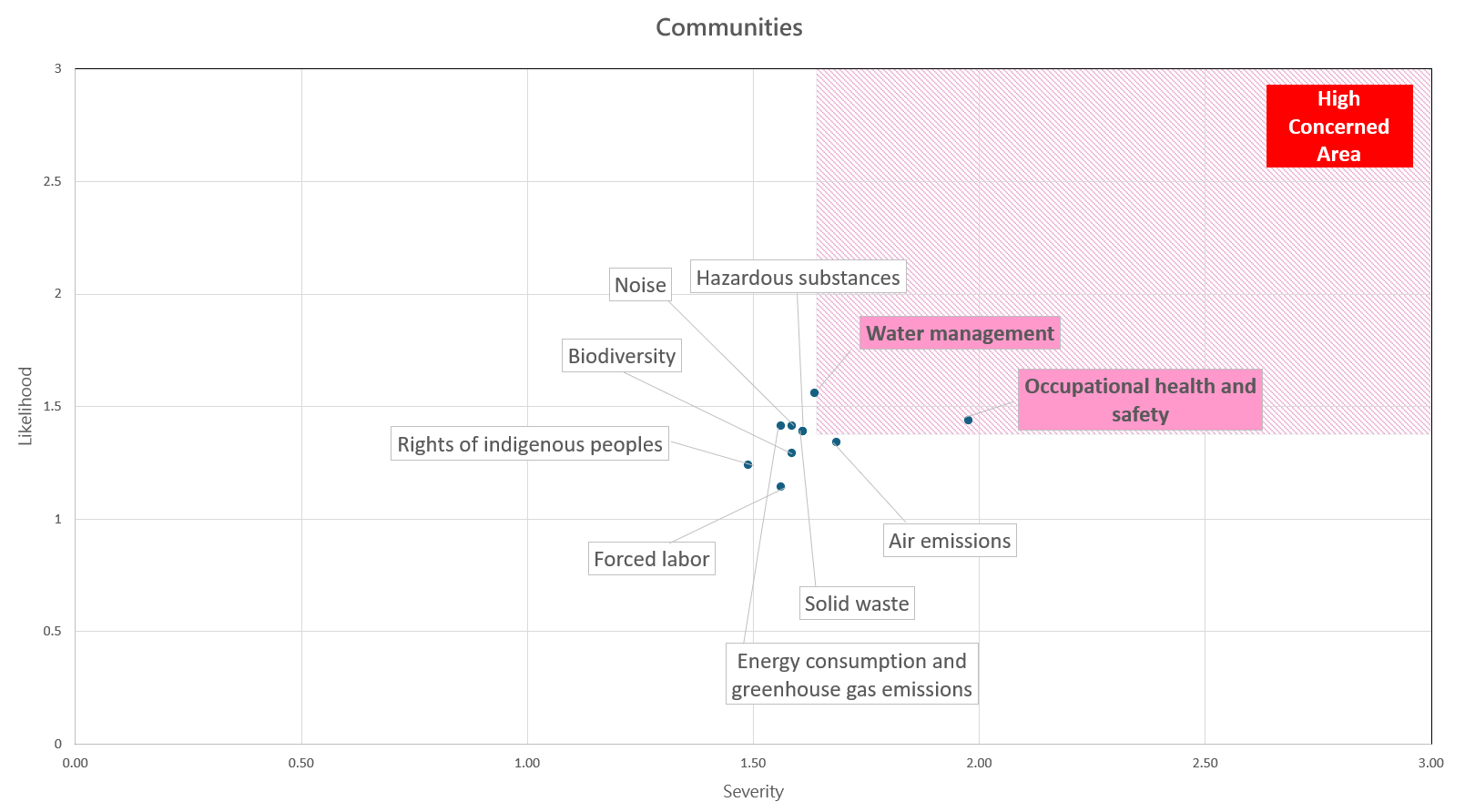
2025 Human Rights Issue Risk Assessment Results
Risk Assessment Category | Assessment | Risk | Risk Mitigation |
Own Operations | 95.65% | 10.46% | 10.46% |
Tier 1 Suppliers and | 45.65% | 4.76% | 4.76% |
Communication Channels and Grievance Mechanism
The Group's various plant sites have established a "Grievance System" to ensure a fair arbitration mechanism for employees whose human rights have been infringed upon. Inventec's "Global Employee Code of Conduct Management Measures" and "Employee Grievance and External Whistleblowing Management Regulations" explicitly encourage reporting any illegal or unethical conduct and outline disciplinary measures. The "Global Employee Code of Conduct Management Measures" also includes audit mechanisms, stipulating those violations of relevant regulations shall be handled in accordance with the "Global Employee Code of Conduct Management Measures" and "Personnel Management Measures" regarding punishments. Inventec protects whistleblowers from discrimination, coercion, reassignment, or other adverse treatment.
| The Six Major Communication Mechanisms | Practice | Shilin Headquarters | Taoyuan Factory | Pudong Factory | Chongqing Factory |
|---|---|---|---|---|---|
| Two-way communication between grass-root employees and executives | Team leader and workers’ representative forum | ||||
| Discussions on business strategy and operational development | Director level meeting | ||||
| Monthly meeting | - | ||||
| Cross-functional communication | Technical committee meeting, project meeting, and teams meeting | ||||
| Labor-management communication and welfare policy and promotion | Management and labor council | ||||
| Welfare committee meeting | - | ||||
| Problem response and information advisory | iService, LINE, WeChat, and Facebook | ||||
| HR and factory communication website | |||||
| Employee care hotline | |||||
| One-stop service contact | - | ||||
| Suggestion box | |||||
| Employee care group | Employee care committee meeting (forum) |
Employee Engagement Survey
To comprehensively master the core topics that employees care about and to continuously optimize the employee experience, the Company regularly executes employee engagement surveys to systematically collect opinions on dimensions such as work experience, work motivation, stress, well-being, and workplace benefits. The survey also incorporates Employee Engagement, Employee Satisfaction, and Employee Well-being into evaluation indicators to actively listen to the voices of employees. In 2025, the Taiwan facilities distributed 5,072 questionnaires to indirect personnel, with 4,102 respondents, and the response rate reached 80.9%, which increased by 7.6% compared to 2024. 87% of employees believed that their experience exceeded expectations; in the employee engagement dimension, 67% of employees gave a highly satisfied evaluation. In 2026, the scope will be expanded to plants in Taiwan, Mainland China, Thailand, the Czech Republic, and Mexico. Integrating survey results and communication feedback, the Company summaries four core action plans based on “emotional, social, financial, and structural” to continuously improve.


